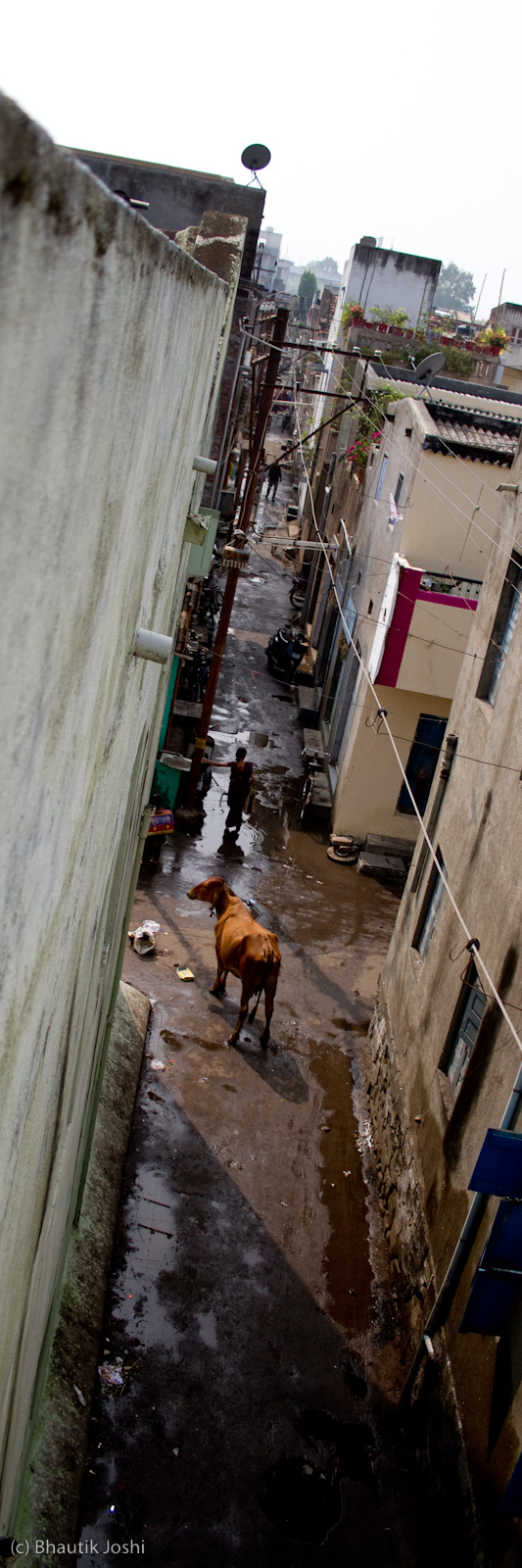
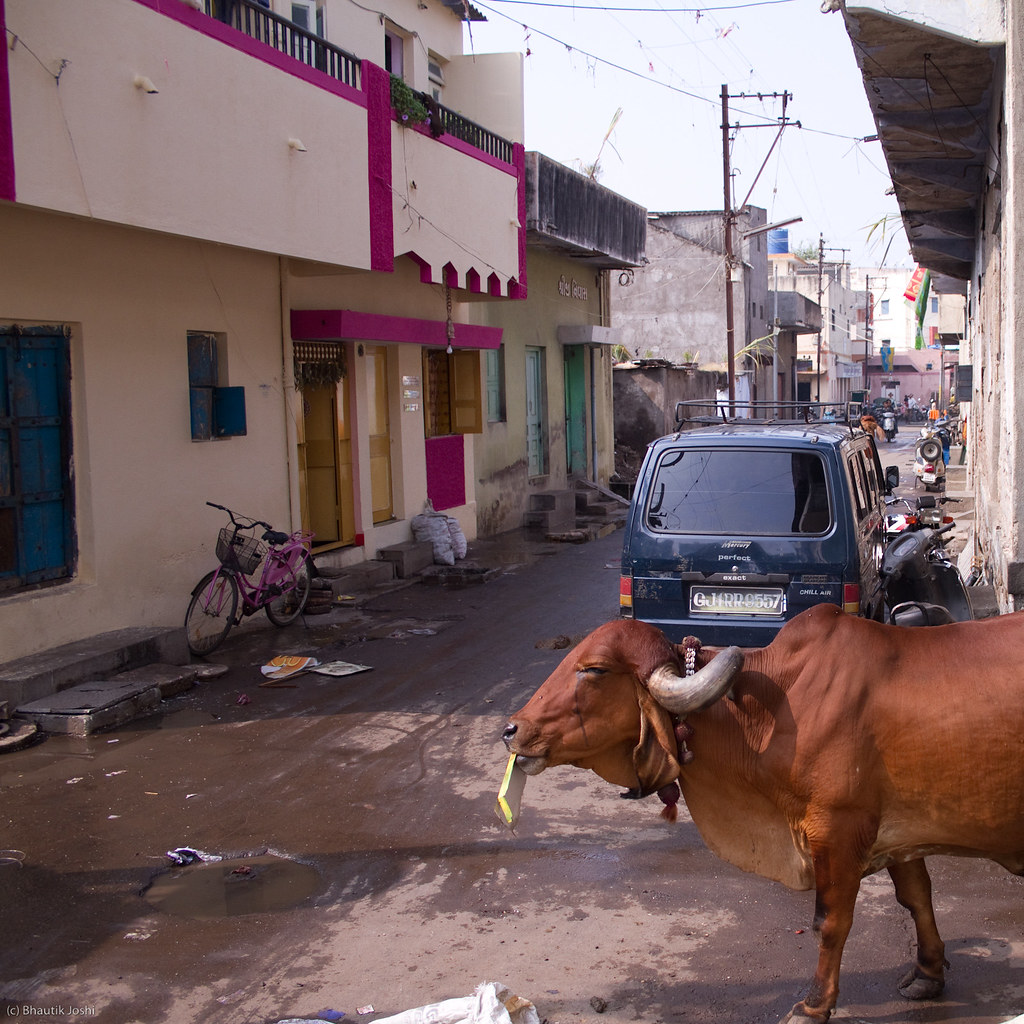
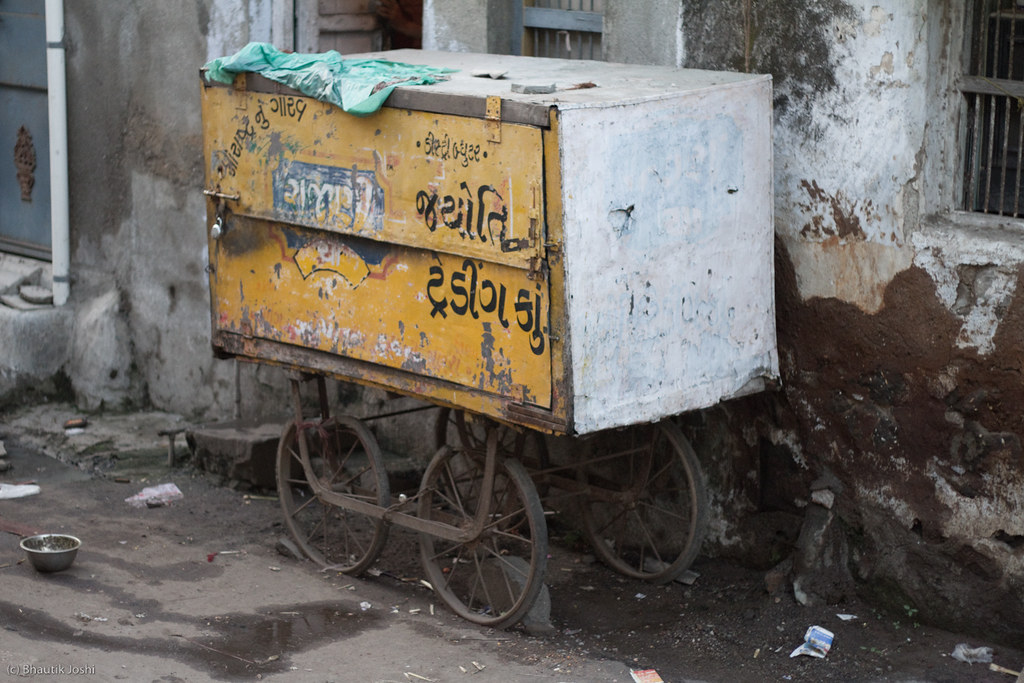
As I mentioned previously, cows are an extremely common sight in Rajkot. They're an ancient part of the system here, and aside from blocking traffic they really are used to produce milk. Secondarily they also consume refuse, which frequently seems to be liberally thrown out into the street.
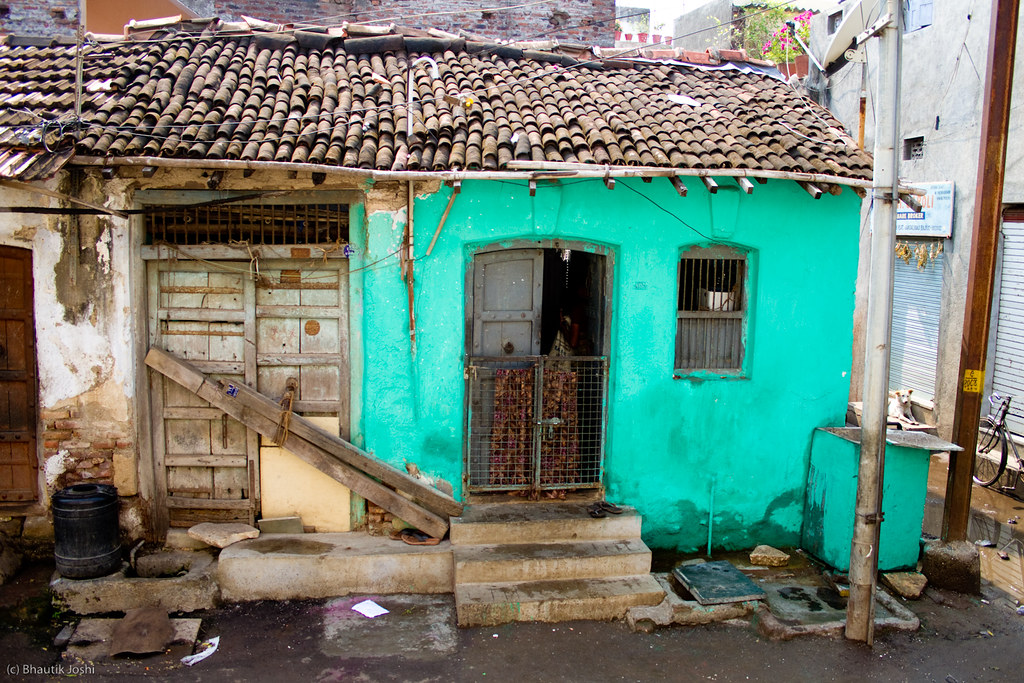
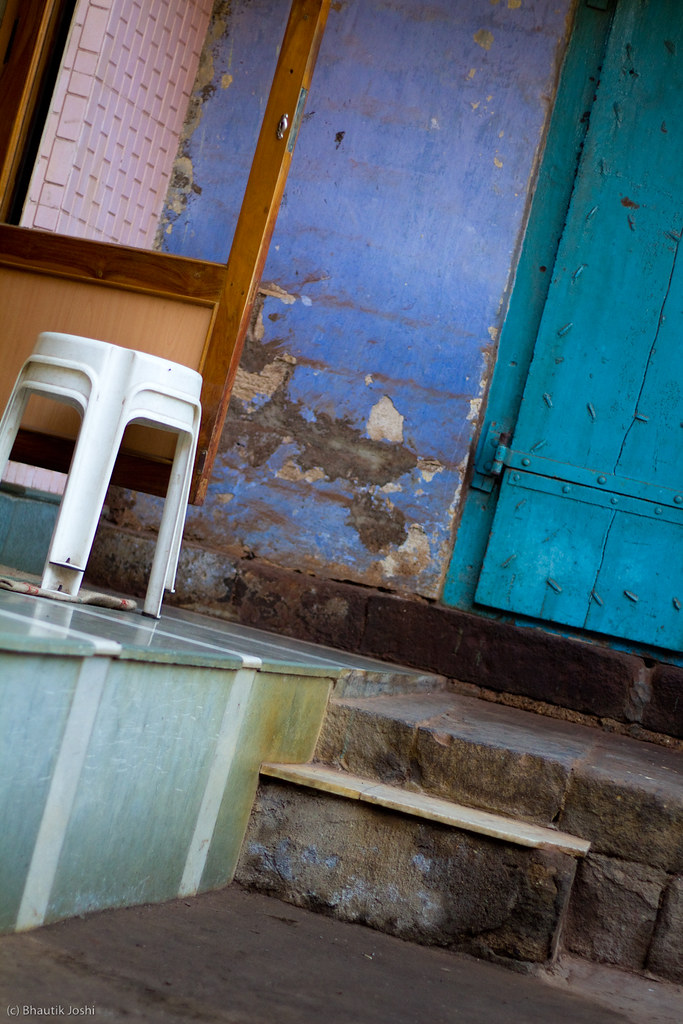
The brightly coloured house opposite my grandmothers place.
There are occasions where, wandering around, you can almost imagine that you've stepped back a hundred years in time.
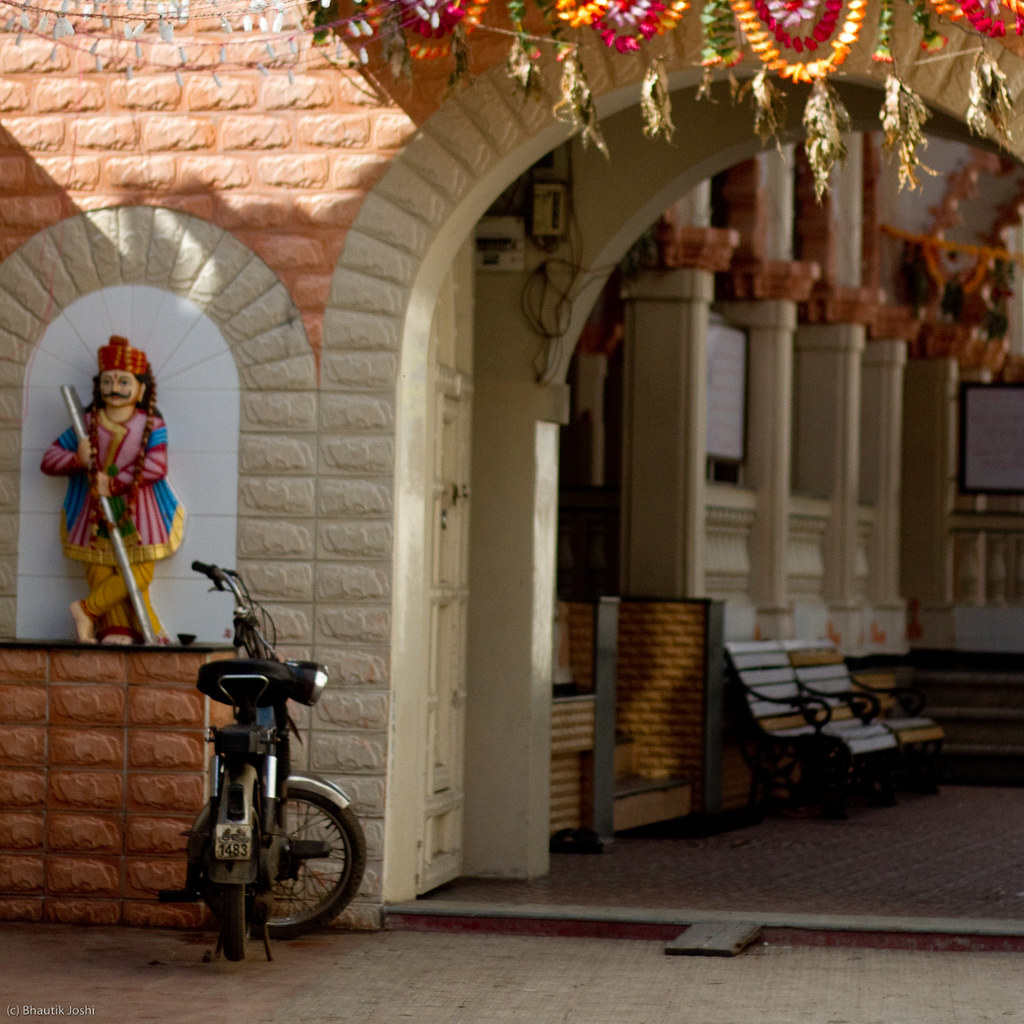
I'd occasionally stumble across temples - some stood on their own, some nestled in laneways. Of these, some were lavishly decorated - sparkling clean and strewn with flowers amongst the surrounding grime. I'm not sure, however, how to feel about this - overseas, many of organisations will ask for donations to build temples, and while they are beautiful I'm reliably informed that they don't really give back to the surrounding community. I could chalk it down to just another example of the gap between rich and poor in India but there's something insipid about using religion as a front for accumulating wealth.
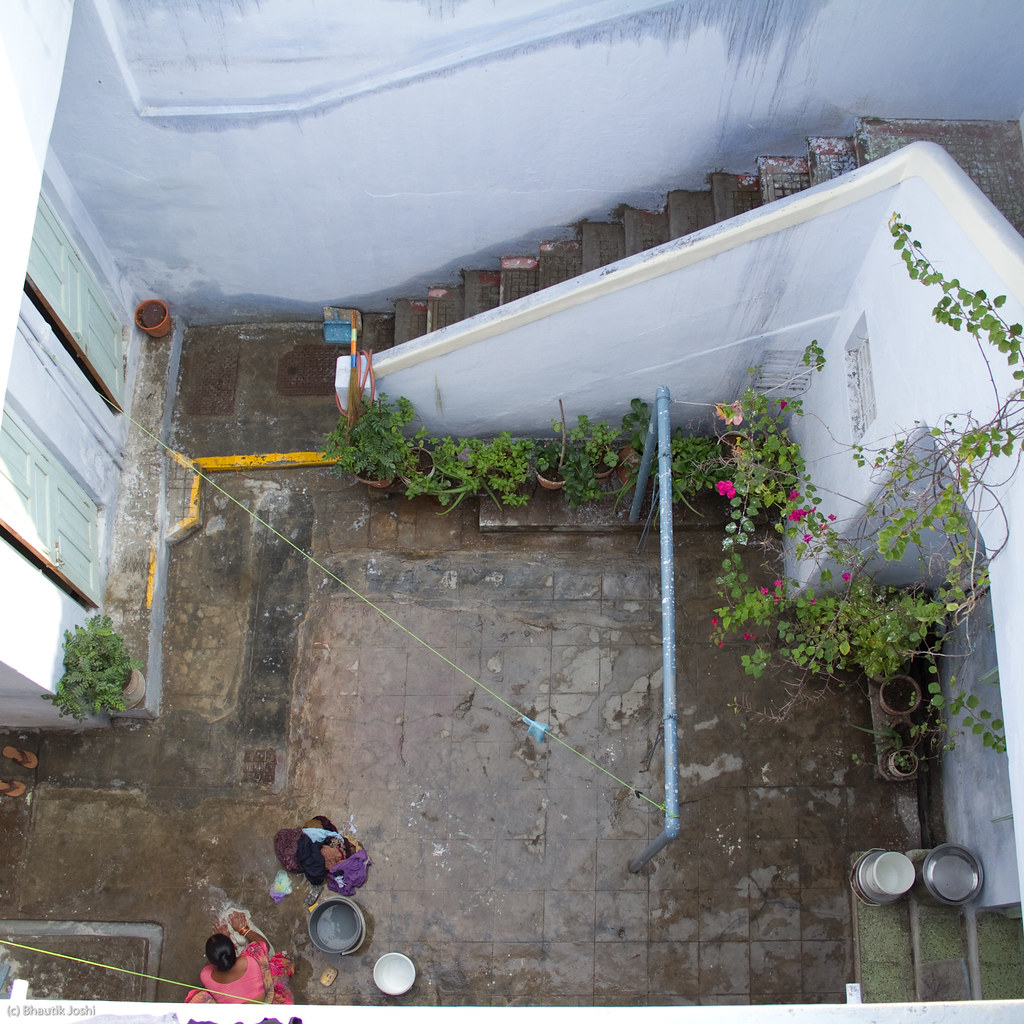
This is the interior of my grandmothers place - it's a small, square courtyard that's open to the air that's surrounded on three sides by rooms. It has three levels; the top one is the roof and the water tank. The middle floor became unsafe for living in after the earthquake in 2003; you might also note the yellow stripes painted on the step edges - my uncle, who visits often, is a safety engineer in New York.
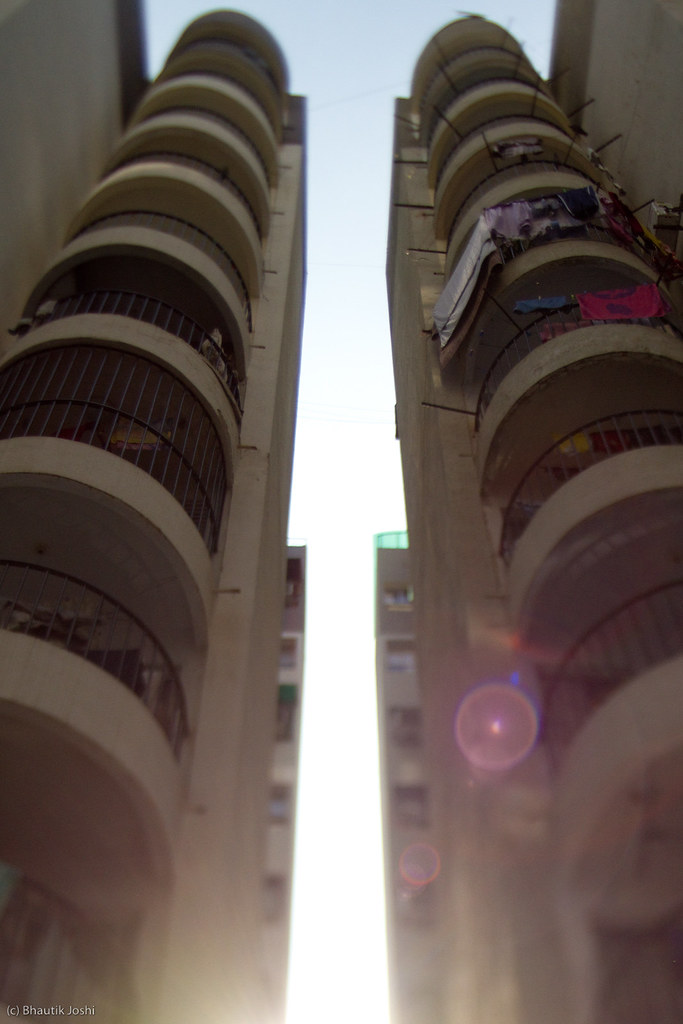
This is the exterior of my uncles place in Ahmedabad, the state capital of Gujarat, which we visited in the couple of days of the trip. The small houses like my grandmothers place are long gone, replaced by high rises and tall apartment blocks.
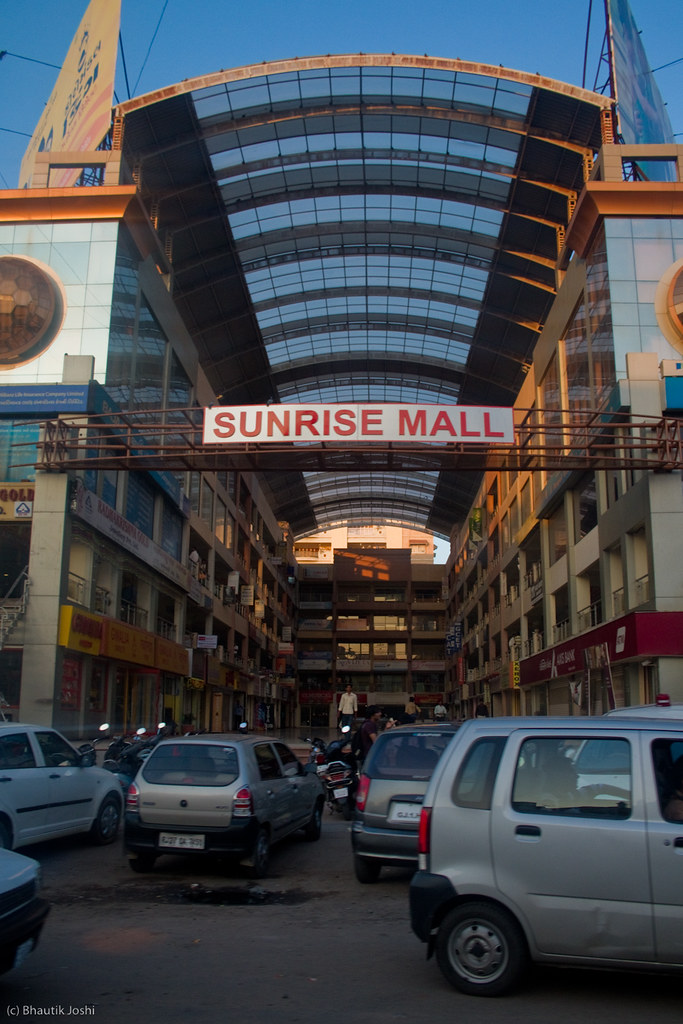
There are parts of Ahmedabad that are quite wealthy - investment and just general economic development means that it's a fast-growing part of the world. There are shopping malls there that, when inside, are indistinguishable from malls in the rest of the world. The only giveaway to indicate that you're not in the western world are the shop assistants that constantly hover inches away from wherever you are. While the wealth is great for those who have it, there's also a certain blandness to it - local flavour is gradually being replaced by what seems to me to be a generic sameness.
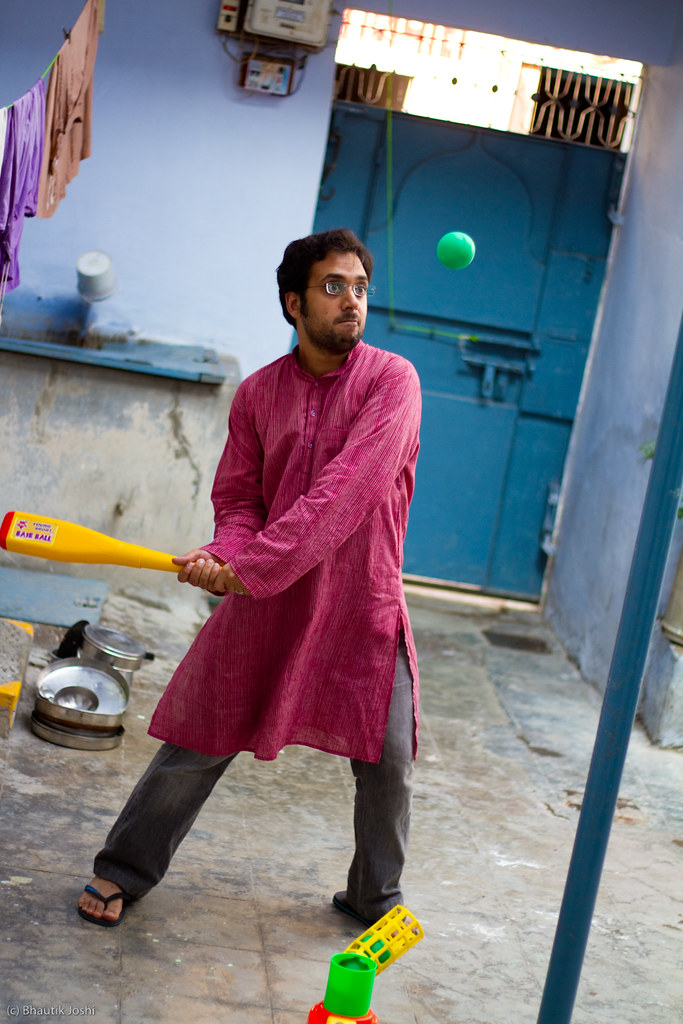
One way to pass the time in Rajkot was to levitate objects using telekenisis. It's not as easy as it looks.
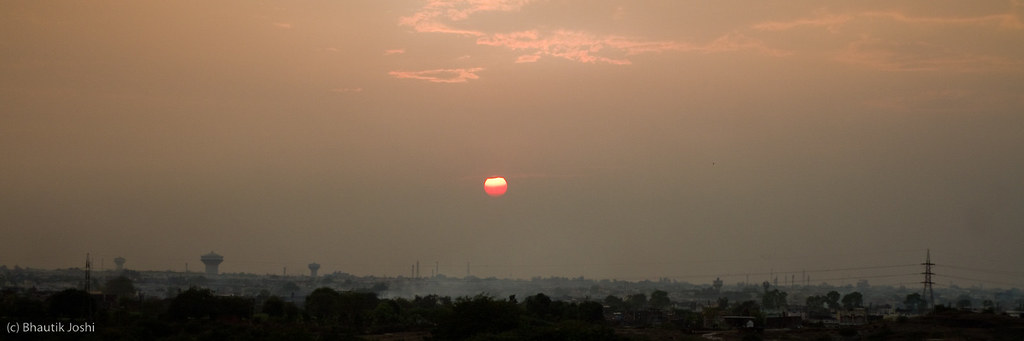
Rajkot is a city of 1.5 million people, having rapidly expanded in the recent past. I remember lying on the rooftop of my grandmothers place and sleeping out under a blanket of stars; nowadays, it's difficult to see more than a few points of light on a clear night due to the haze and pollution that covers the city. The city is one of the world leaders in manufacturing diesel pumps, but the success has come at a high environmental price.
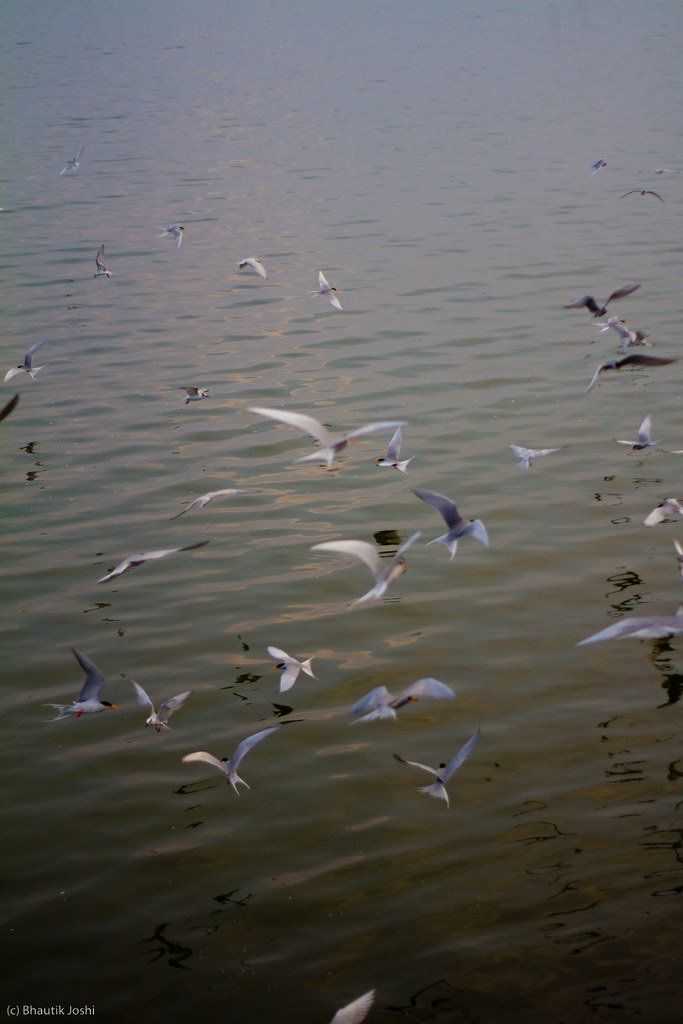
The Aji dam collects water from the river and supplies Rajkot; poor planning, however, means that some parts of the city (notably the large quarter where my grandmothers place is) sits above the level of the dam. As such, after industry has taken its (fairly hefty) share of the water, there isn't much left for residents in these areas. The dam is about as full as it's ever been - the drought has been broken here for several years and heavy rains means that the dam is nearly overflowing.
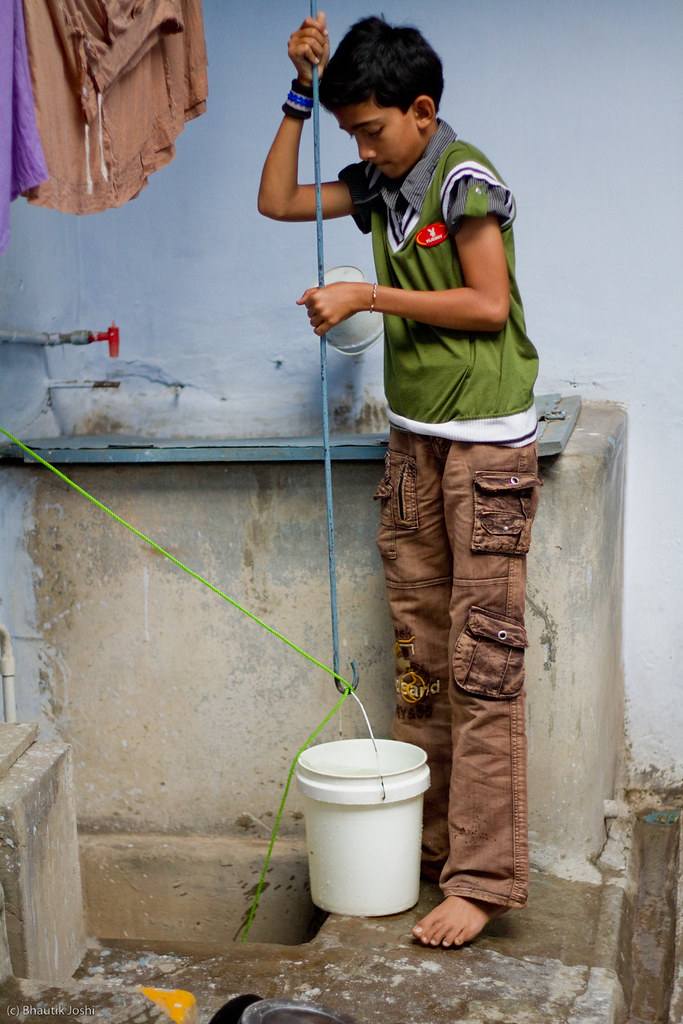
In this part of town, water runs for 20 minutes a day. When the water is running an electric pump runs the water up to a storage tank on the roof - a fixed amount that is carefully used during the course of the day. If the pump is out or if the water runs at another time of day, the water is lifted out using buckets from the small well in the house where it collects for pumping. This picture shows my awesome cousin, Jagrut, doing just that.
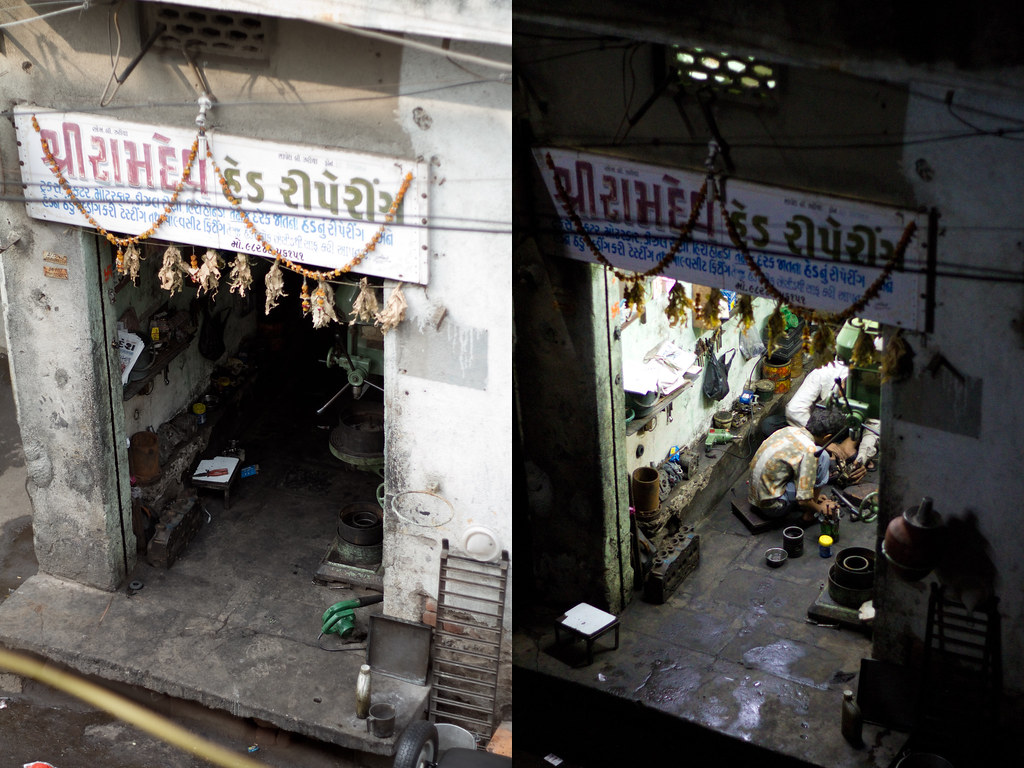
Rajkot is an industrial town; near my grandmothers place, there are a few motorcycle repair shops just like this one. Often it's too hot to work during the day, so a good chunk of the work gets done after the sun has set.
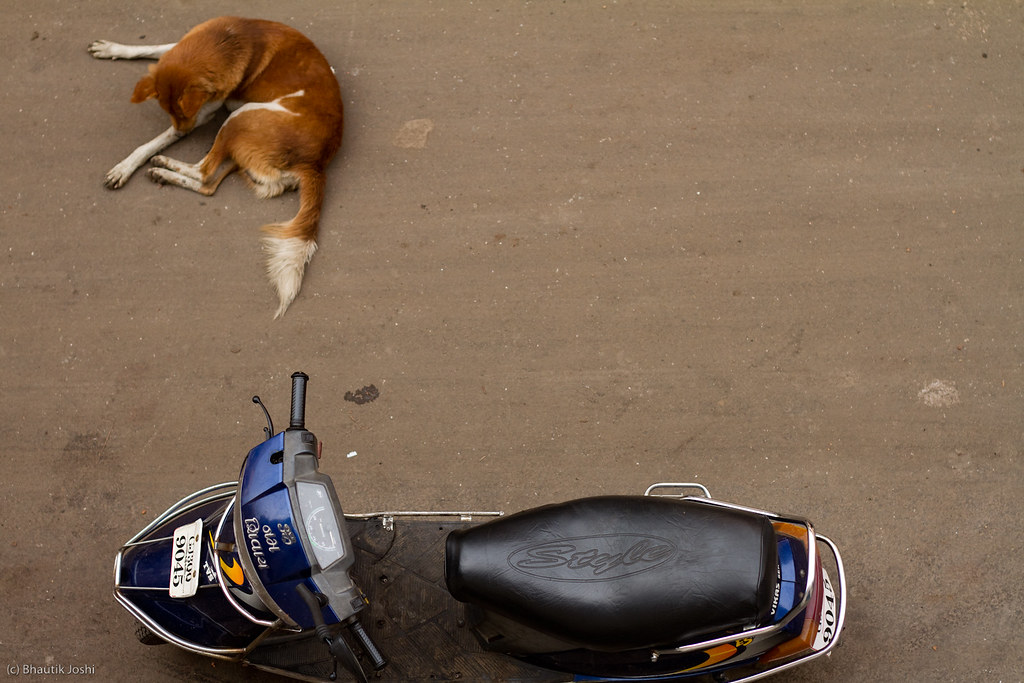
Stray dogs are sometimes looked after by local shopkeepers.
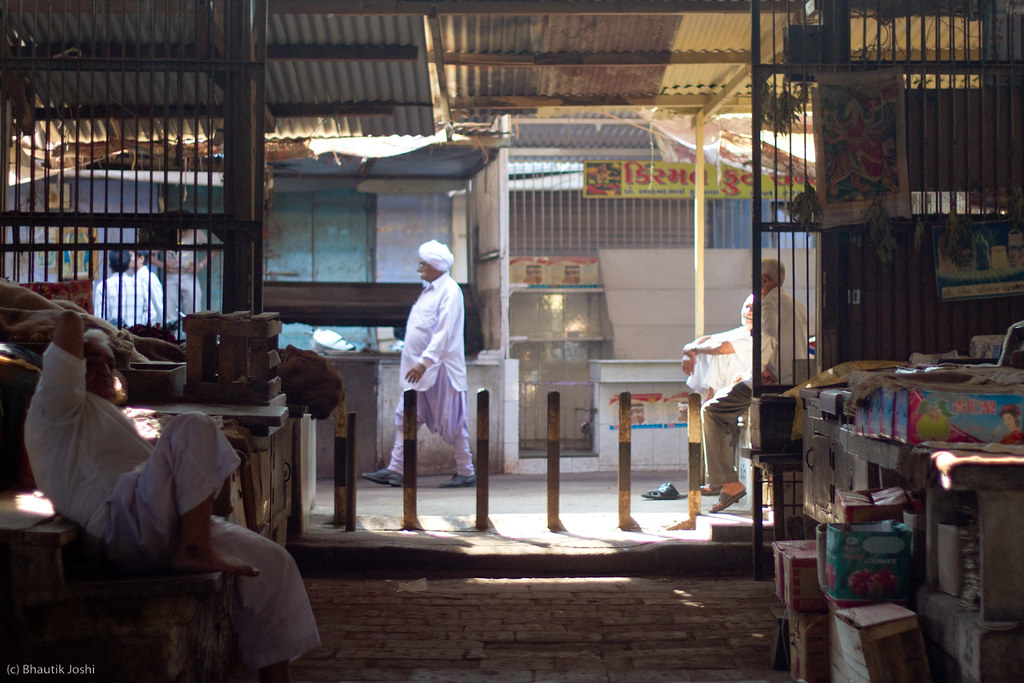
The local bazaar sells fresh produce; it's a rickety old building with high ceilings and it stays cool during the day. My mum went along to get a few vegetables and I snuck about unsuccessfully, noticed at every turn.
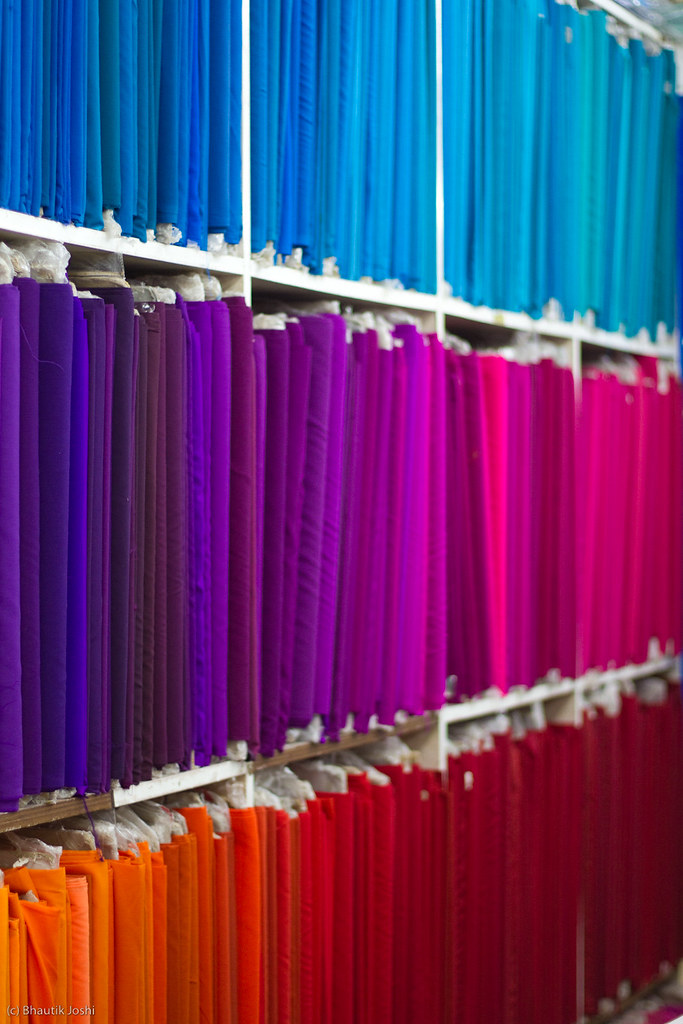
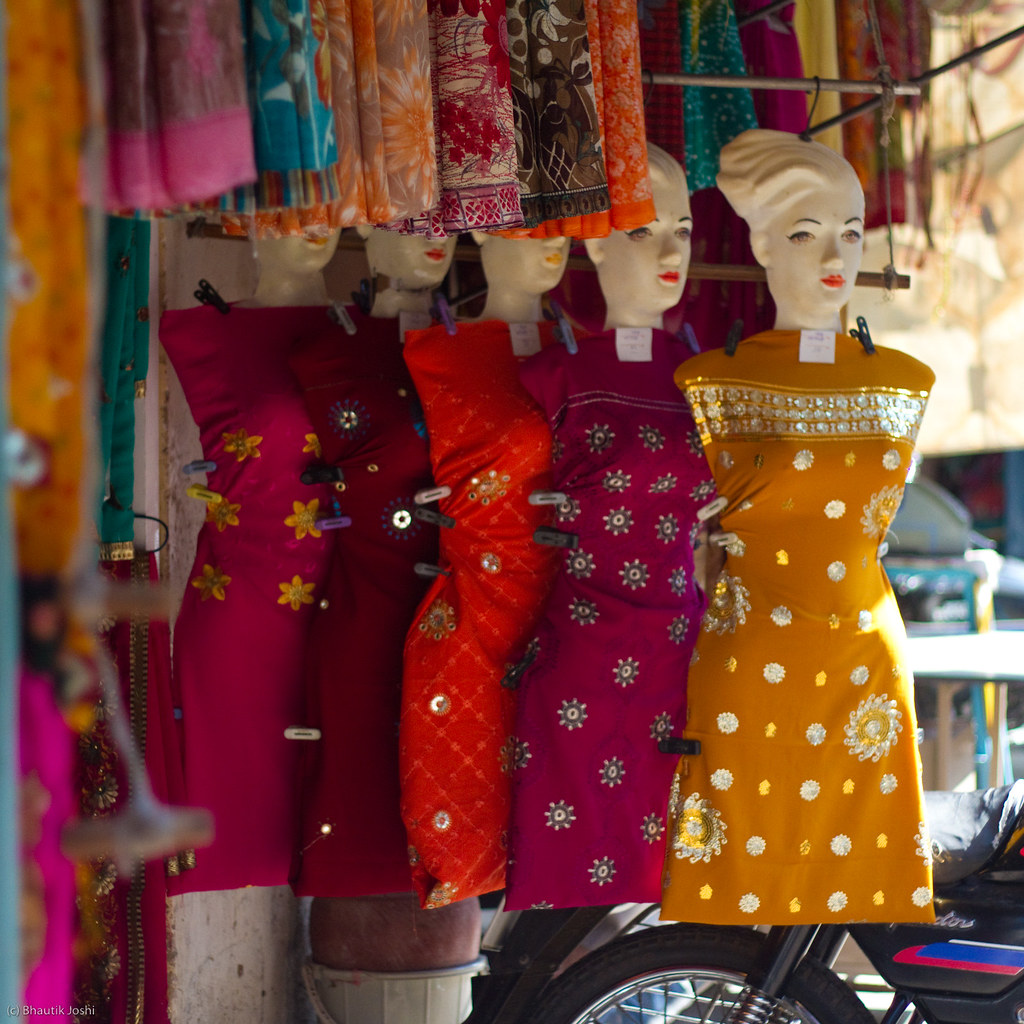
Gujarat state is one of the world's centres for textiles - a lot of cotton is grown here, and much of the chemical industry needed to dye the fabrics is also well established. Bright, vibrant textiles are a staple here, and are easily and cheaply available.
This guy: rolling tobacco in his palms.
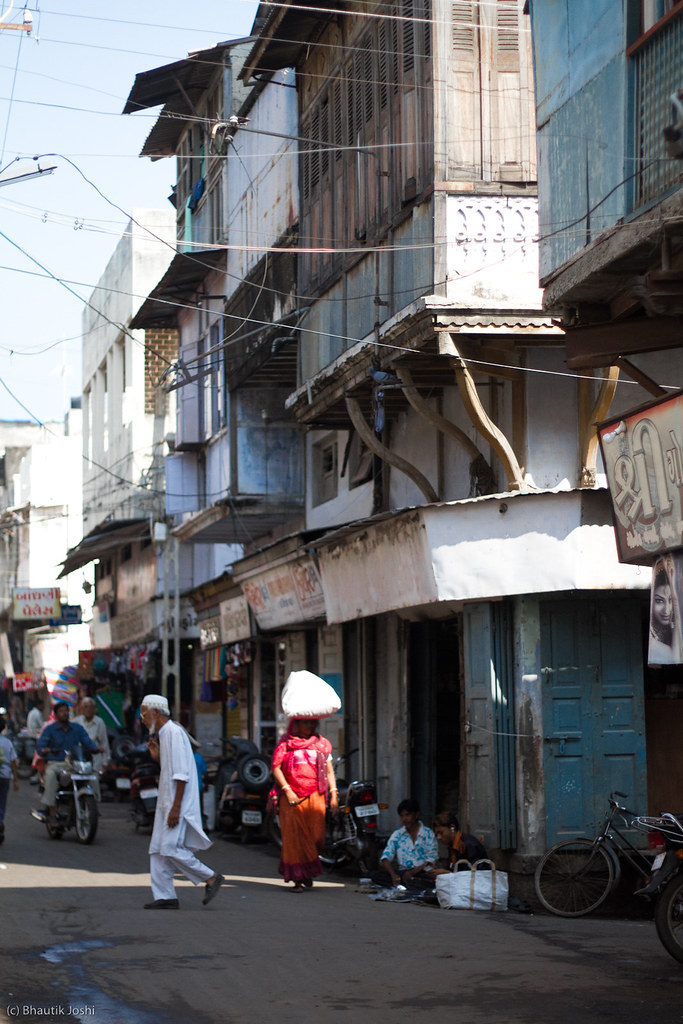
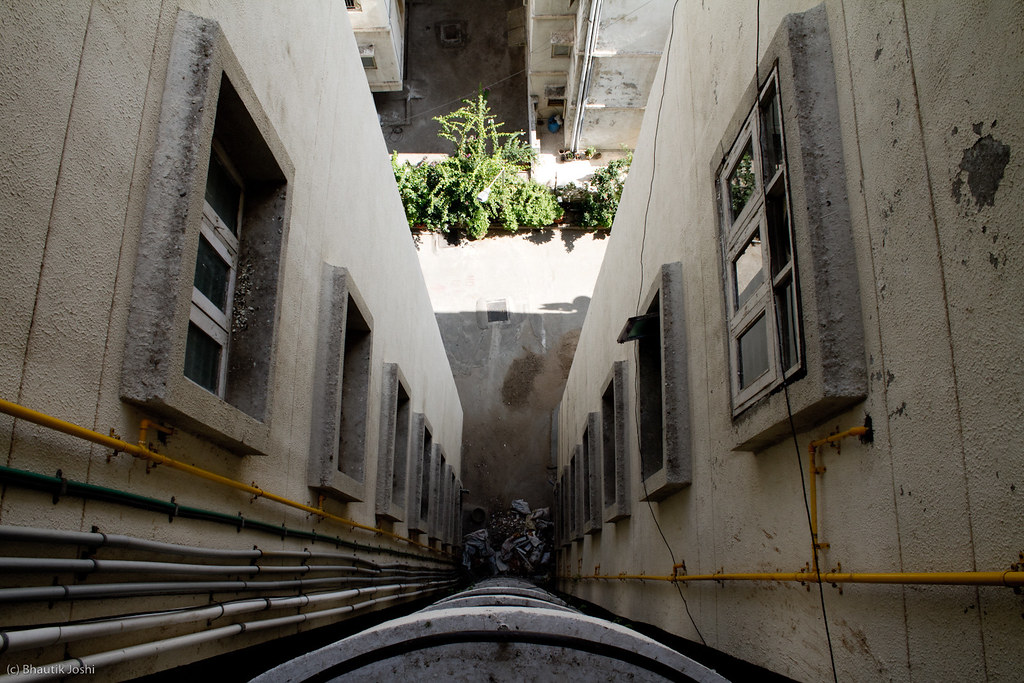
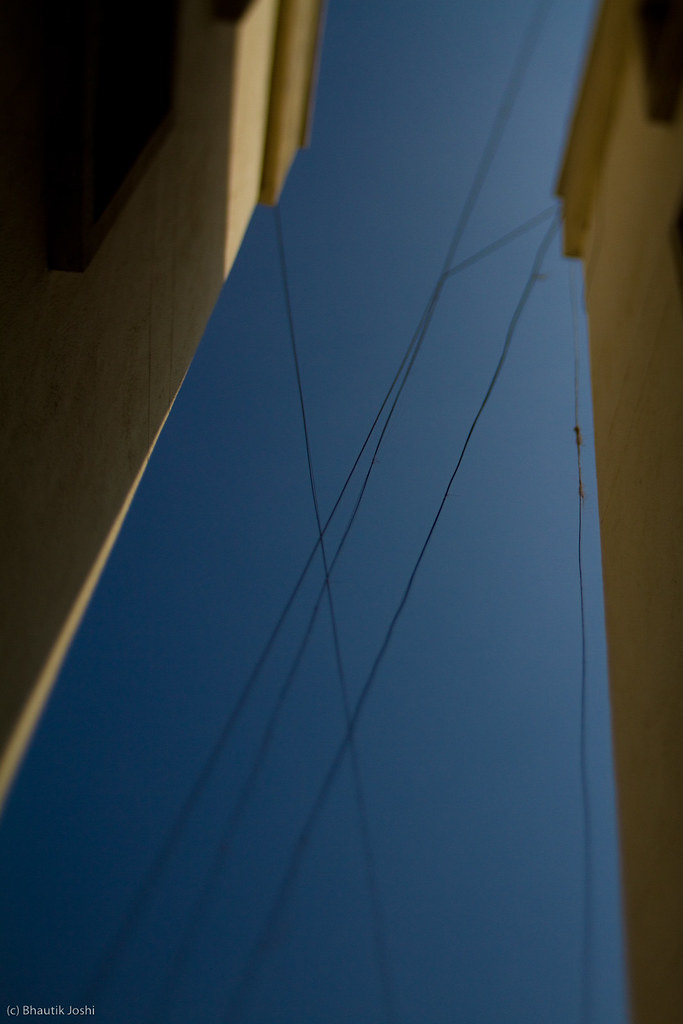
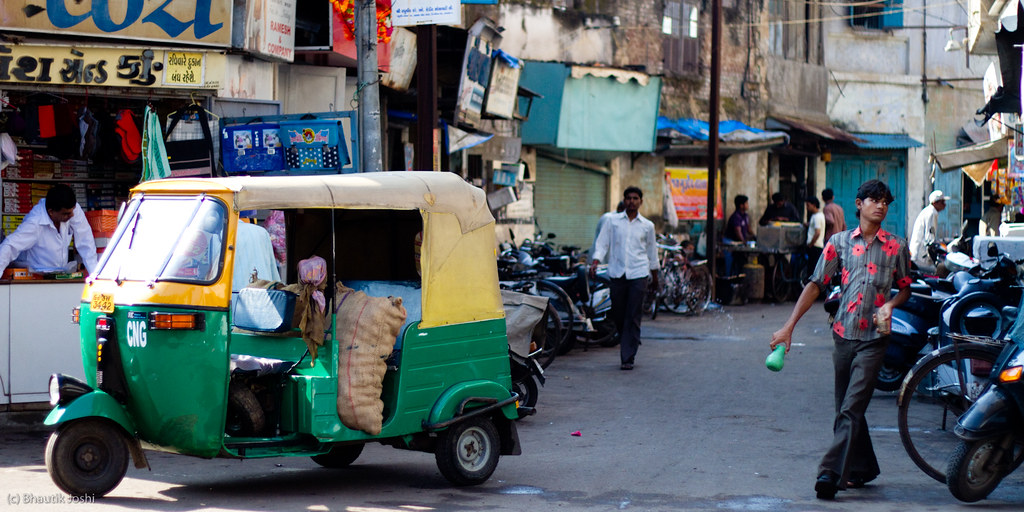
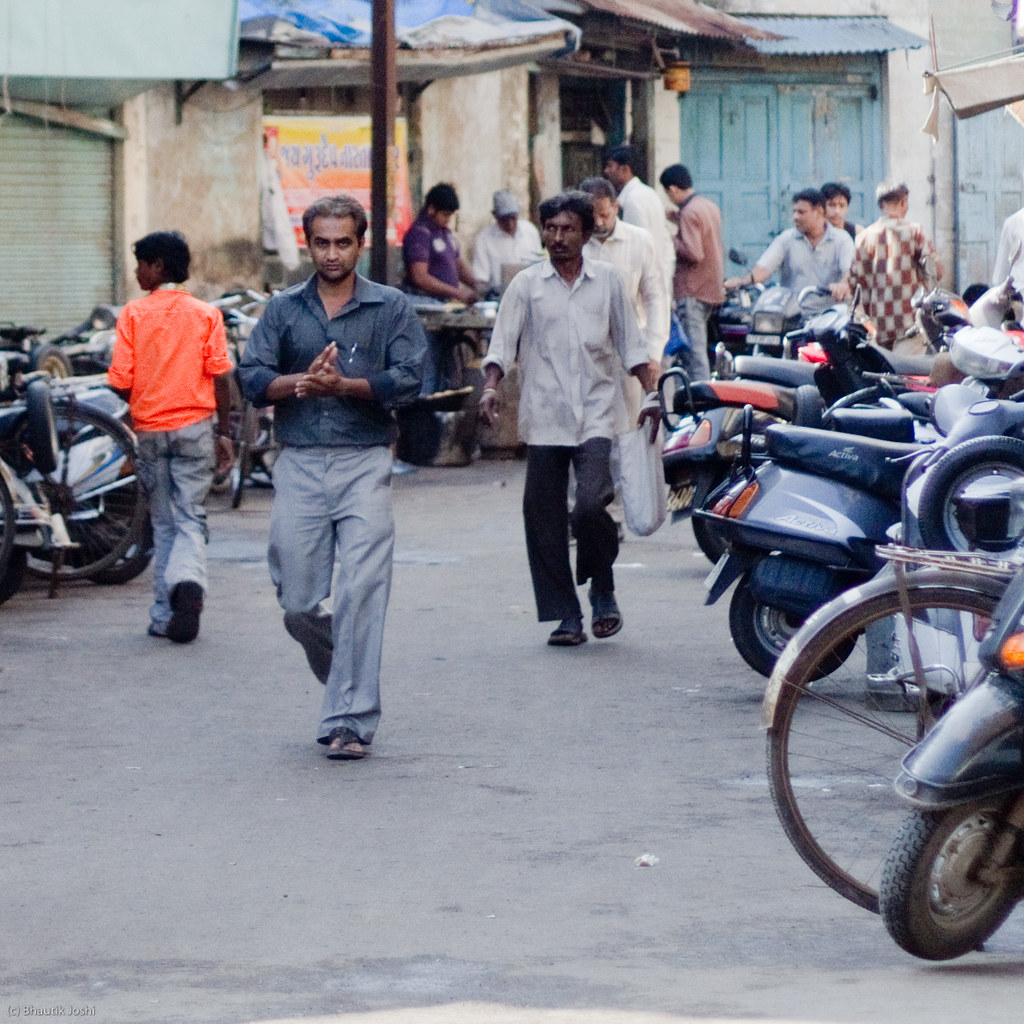
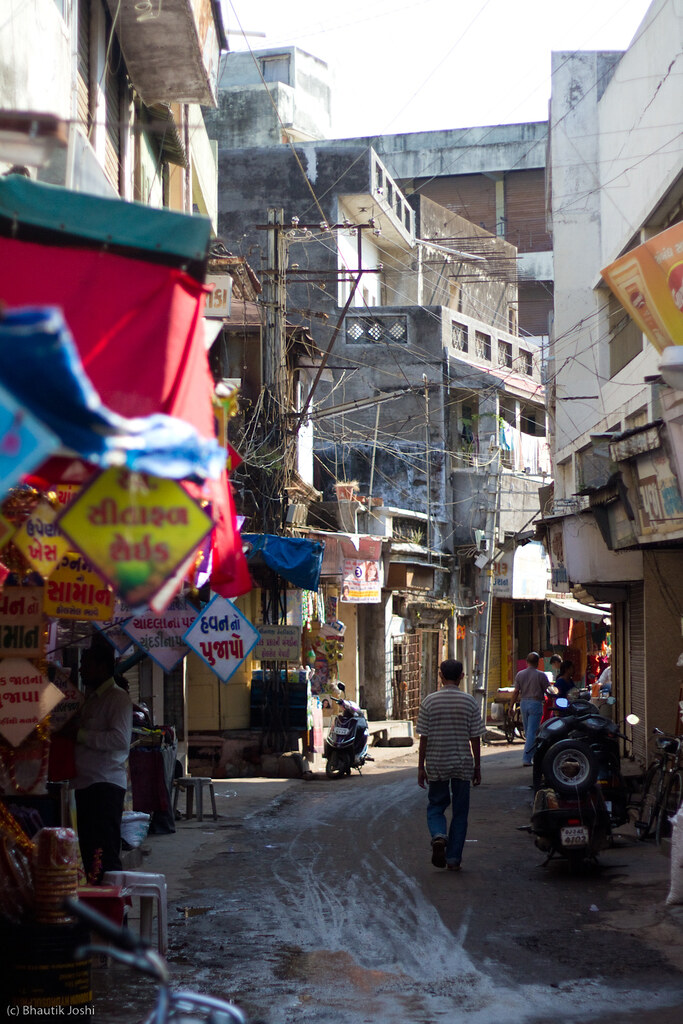
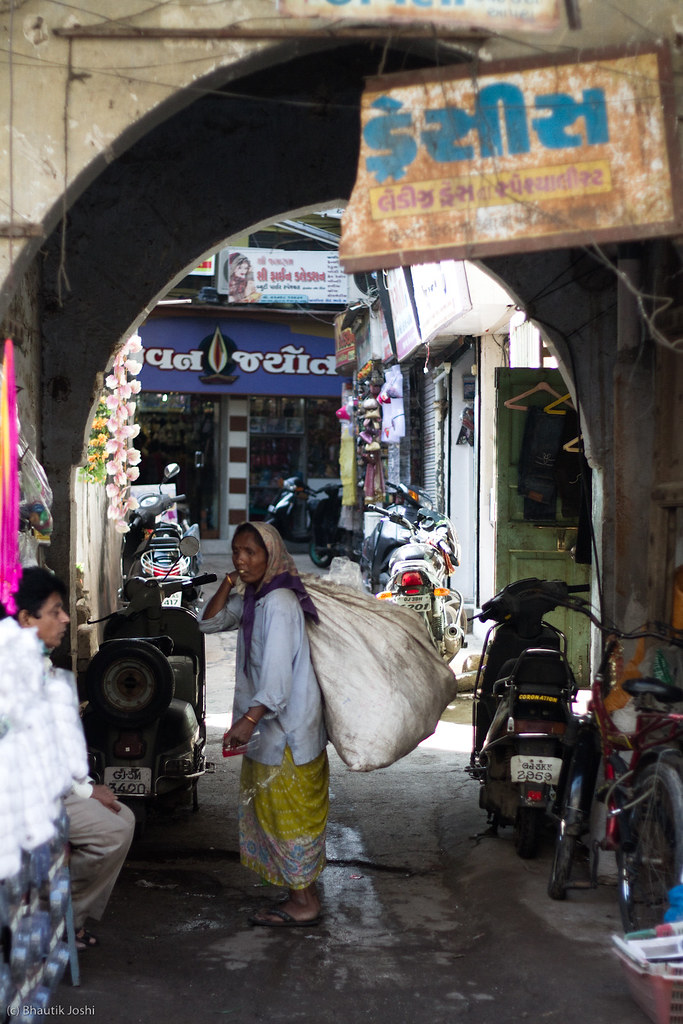
The market district in Rajkot seem to consist entirely of narrow laneways, light filtering down between three-story buildings and the rats nest of wiring that seems to accumulate on every street corner.
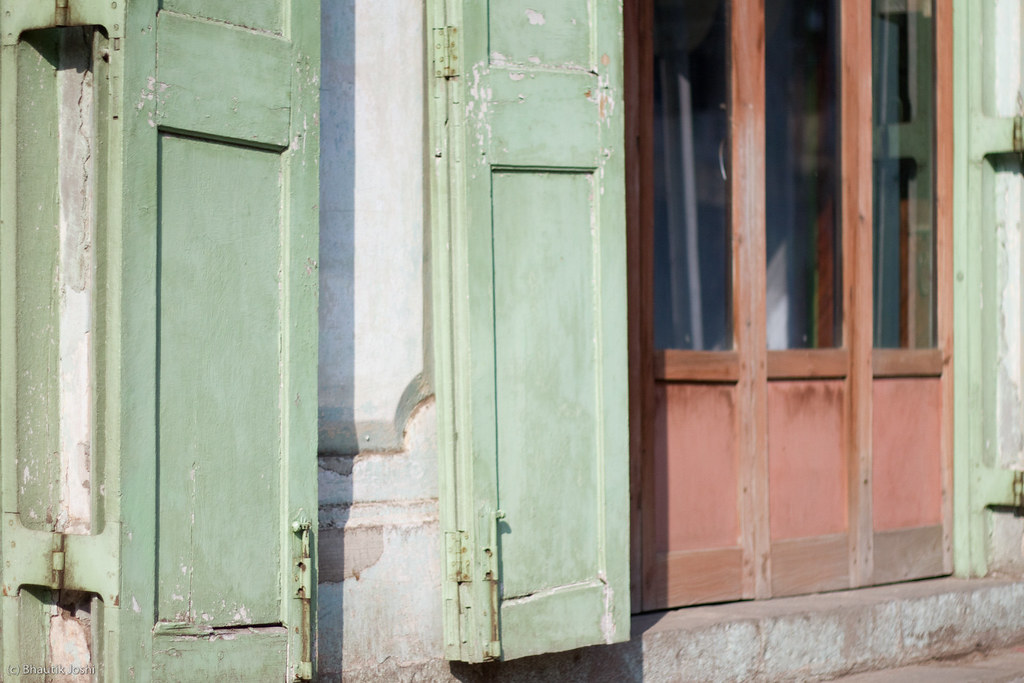
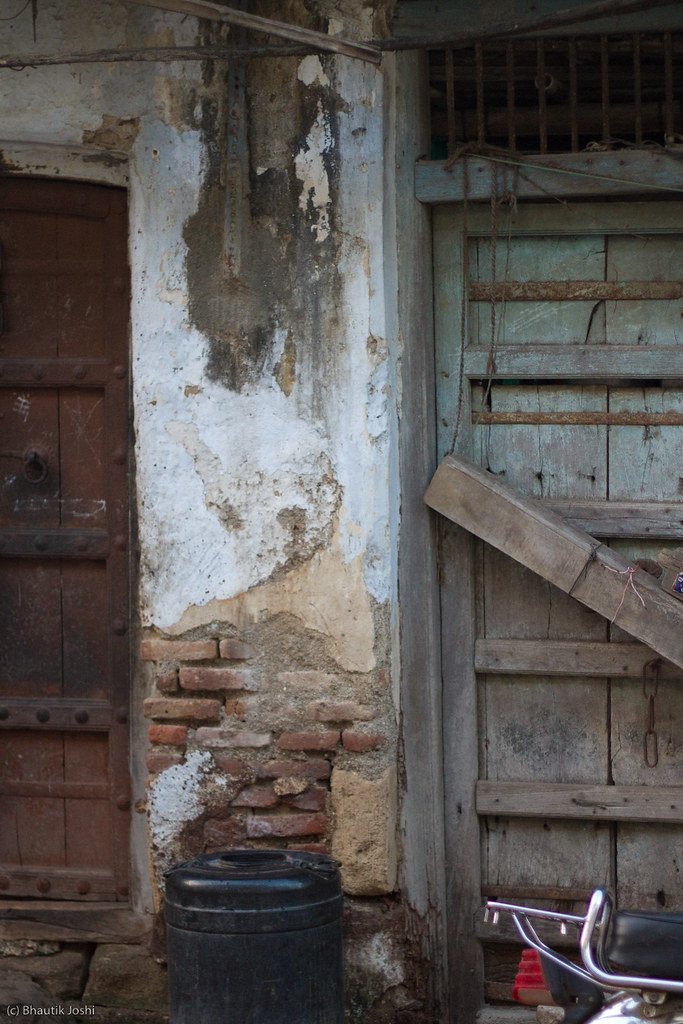
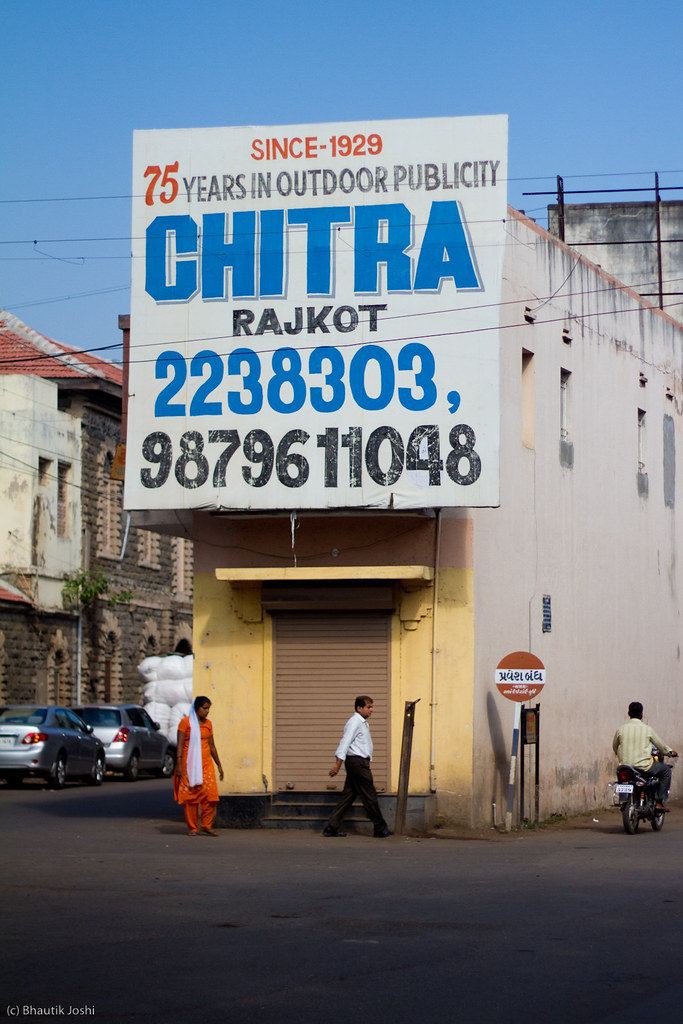
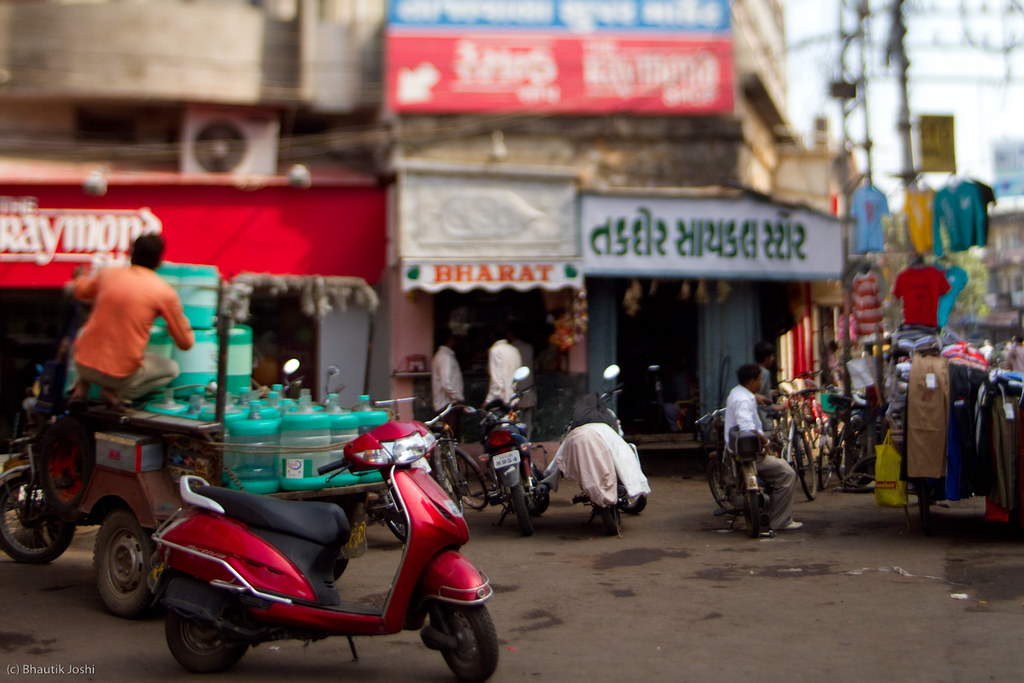
Archways and ancient doors hint at the remains of the old city, which is being (very gradually) replaced by neon shop fronts.